E-commerce: A Complete Guide to the Digital Marketplace
Introduction
E-commerce has transformed the way people buy and sell products by shifting commercial activities to digital platforms. It offers businesses the ability to reach global audiences while providing consumers with convenience, variety, and faster purchasing options. As technology evolves, e-commerce continues to reshape retail, logistics, marketing, and customer interaction across industries.
What Is E-commerce?
E-commerce refers to the buying and selling of goods or services through digital channels such as websites, mobile apps, and social media platforms. It involves online transactions supported by digital payments, automated systems, and virtual communication. This model has become a cornerstone of modern business due to its scalability and accessibility.
Major Types of E-commerce
1. Business-to-Consumer (B2C)
This is the most common model where businesses sell directly to individual customers.
Examples include:
- Online retailers
- Subscription-based services
- Digital marketplaces
2. Business-to-Business (B2B)
Companies sell products or services to other businesses.
Common examples are:
- Wholesale suppliers
- Software companies
- Bulk equipment providers
3. Consumer-to-Consumer (C2C)
Individuals sell to other individuals on digital platforms.
Popular examples:
- Online classifieds
- Peer-to-peer marketplaces
4. Consumer-to-Business (C2B)
Consumers provide value to businesses, often through content or services.
Examples include:
- Freelancing platforms
- Influencer marketing
5. Direct-to-Consumer (DTC)
Brands sell directly to customers without intermediaries.
This model is known for:
- Better customer relationships
- Higher profit margins
How E-commerce Works
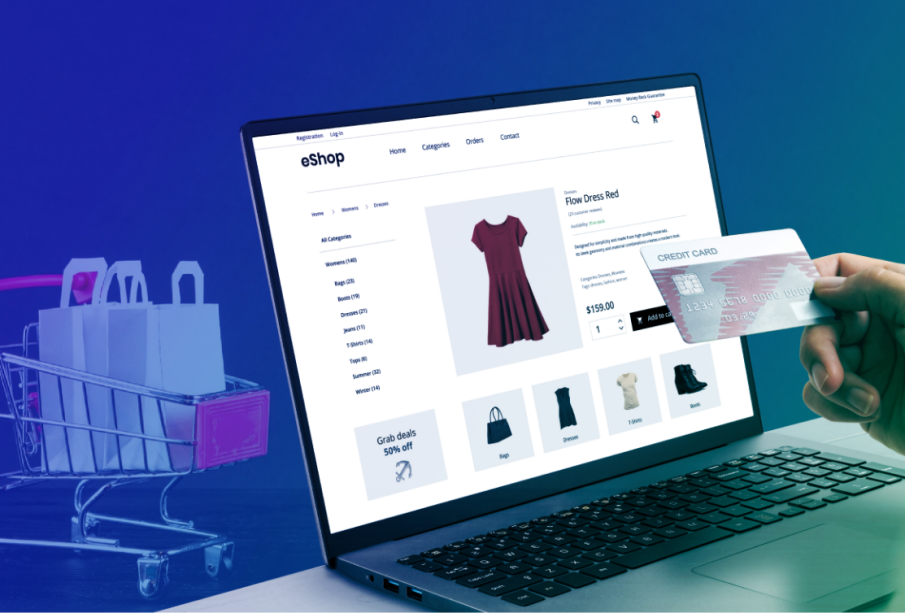
E-commerce relies on several integrated components that function together to complete a transaction.
These include:
- Product listing on digital platforms
- Online storefronts that display inventory
- Shopping carts for order collection
- Digital payment systems such as cards, wallets, or UPI
- Order fulfillment through shipping, logistics, and delivery
- Customer support for post-purchase assistance
A smooth online transaction depends on secure systems, fast performance, and reliable delivery processes.
Benefits of E-commerce
1. Global Reach
Businesses can access customers worldwide without physical boundaries.
2. Lower Operational Costs
Online stores often require less investment compared to brick-and-mortar businesses.
3. Convenience and Accessibility
Consumers can shop 24/7 from any location using internet-enabled devices.
4. Personalized Customer Experience
Data-driven tools help create personalized recommendations and marketing offers.
5. Scalability
Digital platforms enable easy expansion of product lines, inventory, and markets.
Challenges of E-commerce
1. High Competition
The digital marketplace is crowded, making it essential for businesses to stand out.
2. Cybersecurity Threats
Data breaches and fraud pose significant risks to online businesses.
3. Logistics and Fulfillment Issues
Timely delivery and inventory management remain major operational challenges.
4. Customer Trust
New businesses must work harder to establish credibility online.
Key Strategies for E-commerce Success
1. Optimize the Website or App
Fast loading speed, intuitive navigation, and mobile responsiveness are essential for conversions.
2. Invest in Digital Marketing
Effective methods include:
- Search engine optimization
- Social media advertising
- Email marketing
- Content strategy
3. Provide Secure Payment Options
Offering multiple trusted payment methods boosts customer confidence.
4. Focus on Customer Service
Quick responses, easy returns, and reliable support improve customer loyalty.
5. Use Data Analytics
Tracking consumer behavior helps refine marketing, pricing, and inventory decisions.
Future Trends in E-commerce
1. AI and Automation
Smart tools assist with personalized recommendations, chatbots, and inventory accuracy.
2. Augmented Reality Shopping
AR allows customers to visualize products before buying.
3. Voice Commerce
Voice-activated devices are transforming how users search and purchase items.
4. Sustainable Commerce
Brands are focusing on eco-friendly packaging and ethical sourcing.
Conclusion
E-commerce has become a driving force in global trade, offering immense opportunities for businesses and unmatched convenience for consumers. By understanding its models, benefits, challenges, and future trends, businesses can adapt effectively to the digital marketplace and remain competitive in a rapidly evolving environment.
FAQs
1. What is the difference between e-commerce and e-business?
E-commerce focuses on online transactions, while e-business includes all digital processes supporting those transactions.
2. What are the most popular e-commerce platforms?
Common platforms include Shopify, WooCommerce, Magento, and BigCommerce.
3. How do online payments work in e-commerce?
They use encrypted gateways that process transactions securely between customers and merchants.
4. Can small businesses benefit from e-commerce?
Yes, small businesses can reach wider audiences with minimal investment.
5. What factors influence customer trust in online stores?
Secure payments, transparent policies, product reviews, and reliable customer service.
6. How does social media influence e-commerce?
Social platforms drive product discovery, customer engagement, and direct sales through integrated shopping features.
7. What is the role of logistics in e-commerce success?
Efficient logistics ensure timely deliveries, proper tracking, and high customer satisfaction.
If you’d like, I can also create an article on E-commerce Marketing Strategies, E-commerce Website Optimization, or Future of Online Retail.